At a primary school in Dongguan, a teacher had begun to hear from pupils who rarely spoke in her other lessons. In the imagined situations of a drama class, they found ways to express feelings and concerns that had gone unspoken. As they grew more willing to share what they thought, she said, trust began to grow between classmates and with their teacher.
The school was one stop on a four-city tour by Sanja Krsmanović Tasić, President of the International Drama/Theatre and Education Association (IDEA), Madeleine McGirk Rutherford, Managing Director of the International Teaching Artists Collaborative (ITAC), and William Yip, Co-Founder of the ITAC China Hub and a drama educator, theatre director, and teaching artist based in China. The tour took them from an international arts festival to a community theatre, a primary school, and a conference on the future of learning. In each setting, a different version of the same question emerged: when people are invited to take part, what can they help change?
Shanghai · Giving children a say in the theatre made for them
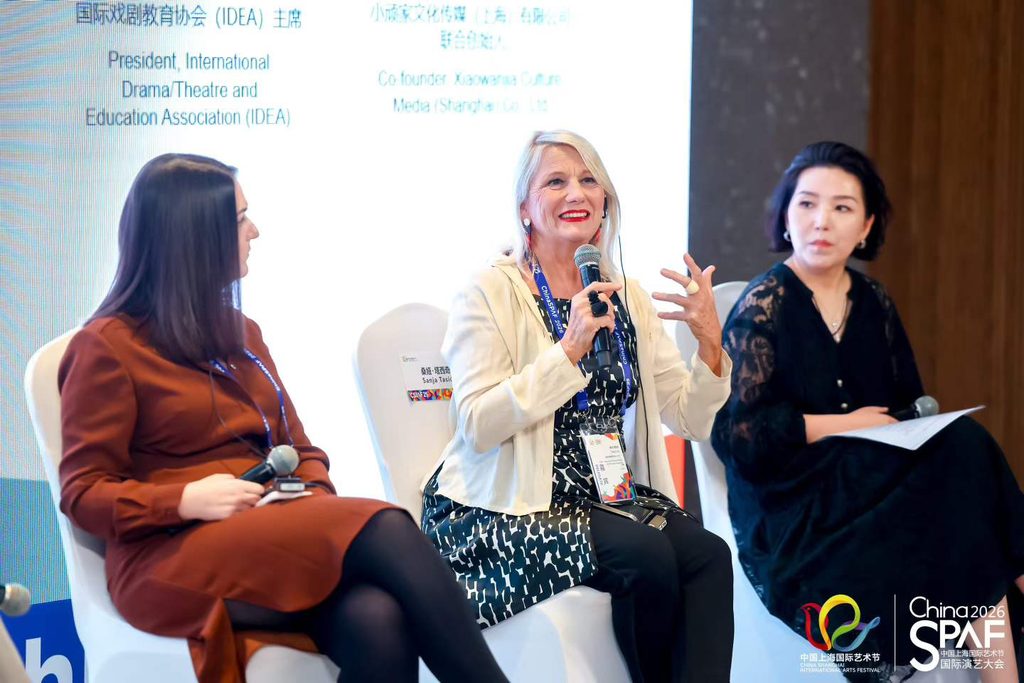
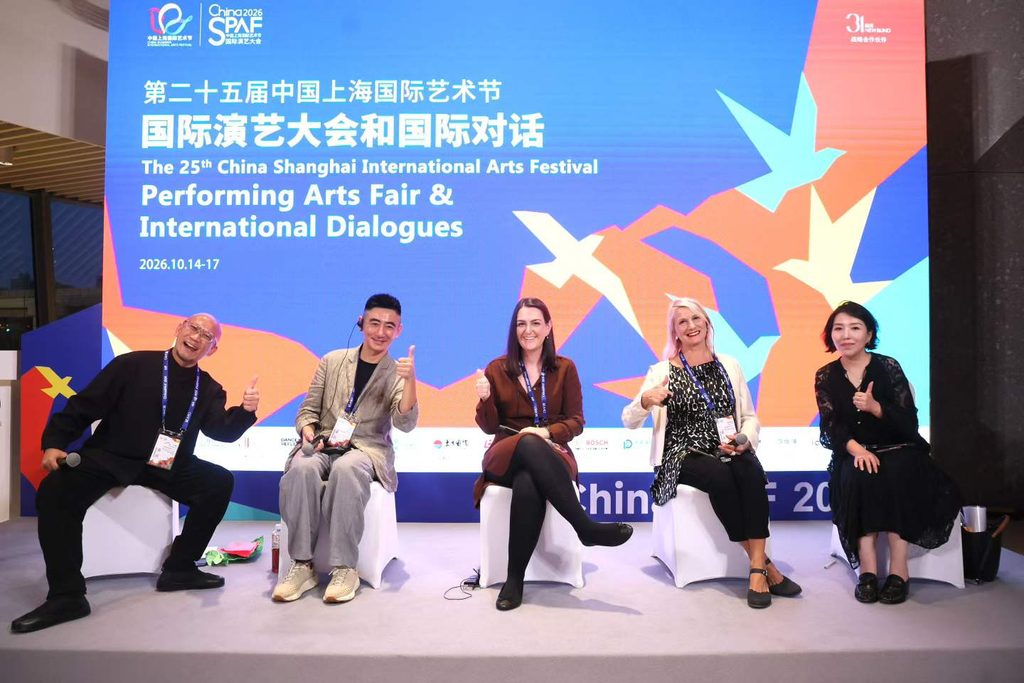
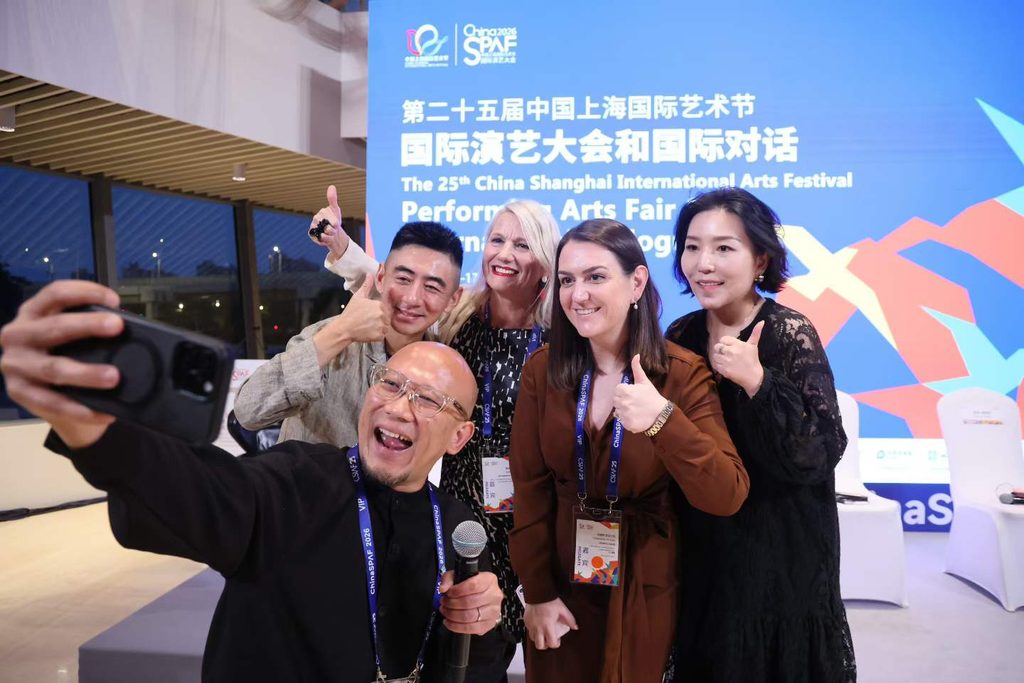
The tour opened on 16 October at the 25th China Shanghai International Arts Festival. William moderated and contributed to Co-Creating with Children: Equitable Participation, Public Education, and Global Networks, part of the festival’s International Dialogues. Sanja and Madeleine joined him alongside Mao Ernan of the China National Theatre for Children and Ling Ling of Xiaowanjia Culture Media.
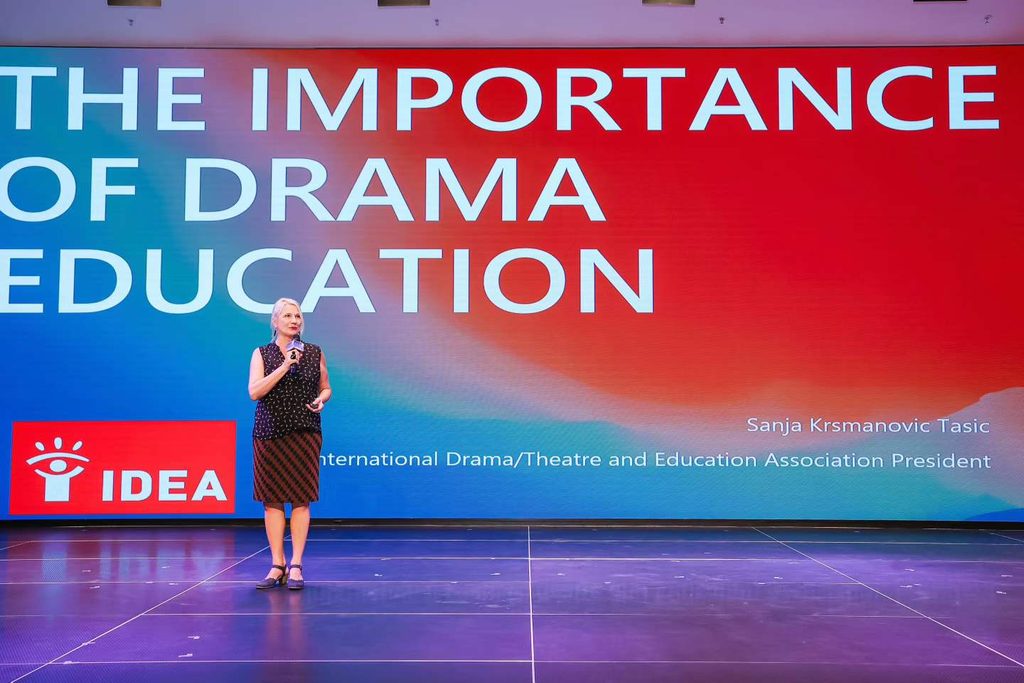
Sanja described drama as a way of “rehearsing the future.” She spoke of small “utopian spaces” where children can explore difficult realities and imagine more just and peaceful ways of living together. She connected that experience to active citizenship. “We have to give the children the power to speak, to be experts, to share,” she said.
Madeleine asked what it takes for children with different needs to feel able to participate. “There has to be trust, and there has to be safety, psychologically, physically, whatever that looks like,” she said. A teaching artist’s job, in her view, is to help others discover what they can create. Sometimes that means being willing to “scrap the lesson” when the children in the room bring something more pressing or more interesting than the facilitator had planned.
William approached the question as a director making theatre for children. He described that choice as a responsibility to listen while a production is still taking shape. His team invites children to script readings and trial performances at a point when their responses can still change what reaches the stage.
Shenzhen · From community theatre to global dialogue
The group’s first Shenzhen engagement took place at Shenzhen Children’s Palace. Parents made up much of the audience, and school leaders also attended. For many, it was their first opportunity to hear directly from drama educators and teaching artists about what their work involves.
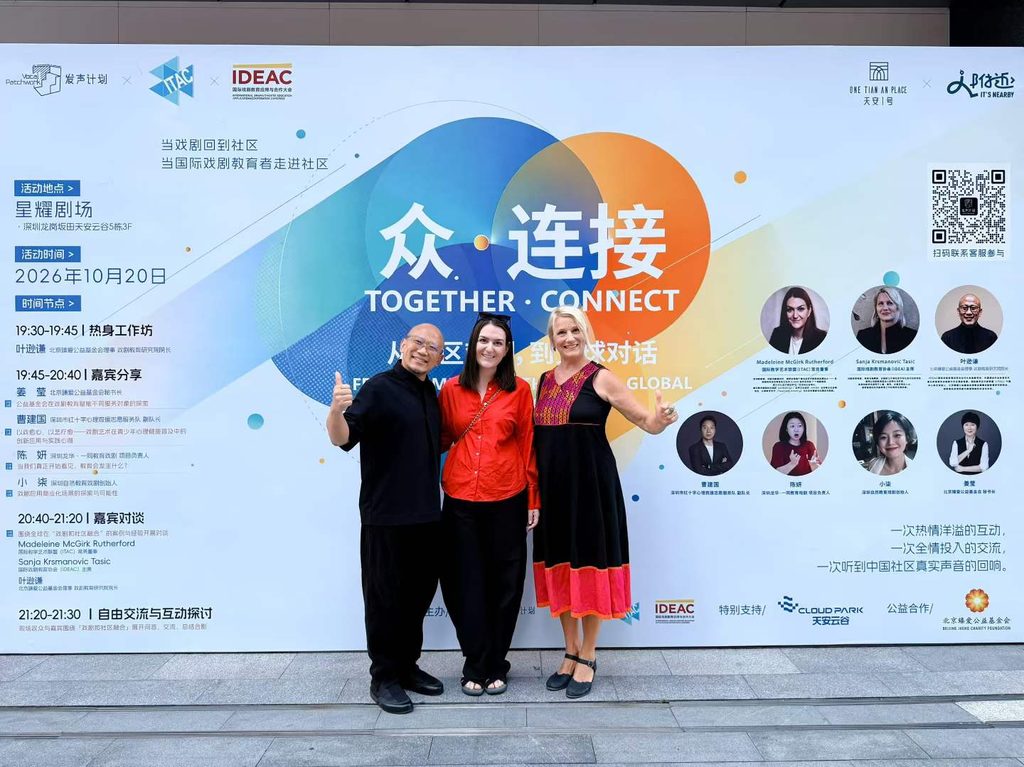
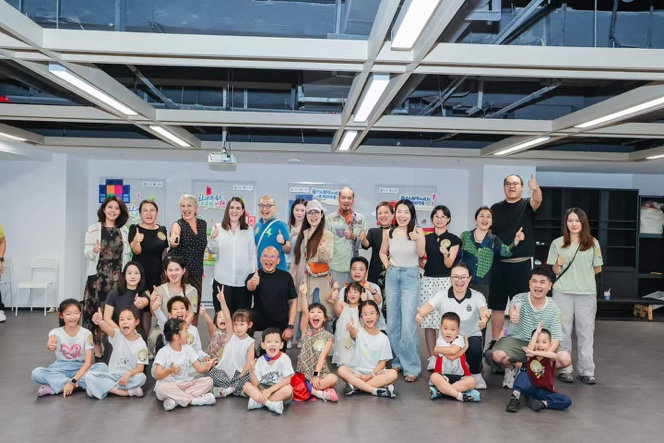
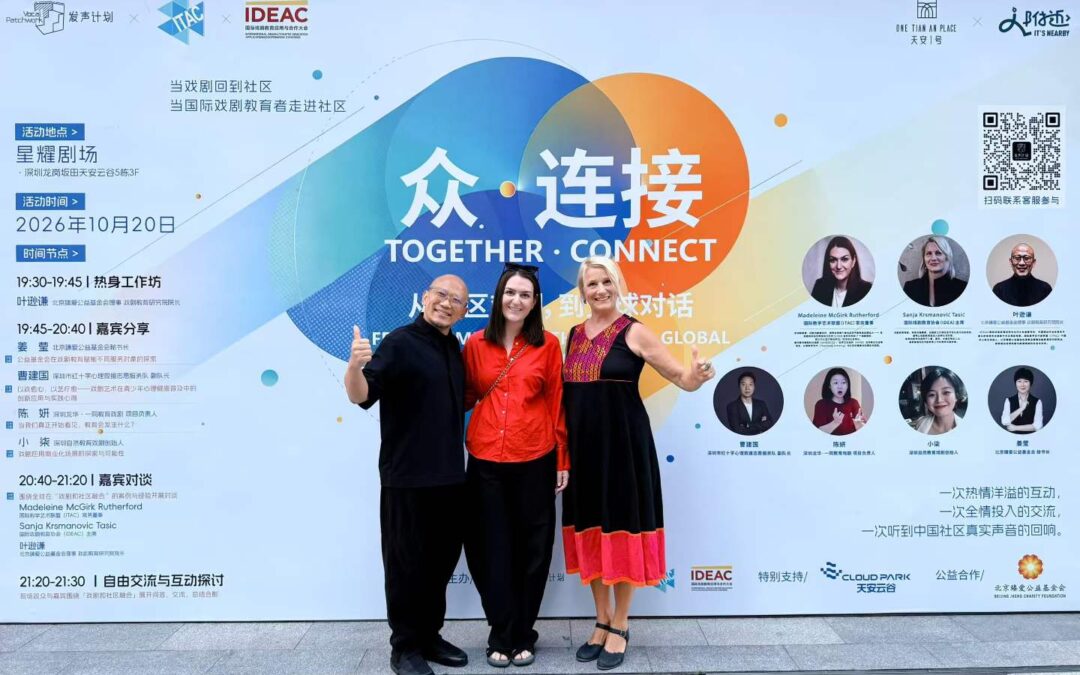
On 20 October, more than 200 community residents and theatre enthusiasts gathered at Xingyao Theatre in Longgang for Together · Connect — From Community Theatre to Global Dialogue. It was the fourth public sharing event of the Drama Education Spark Initiative, jointly launched by the Beijing Jheng Charitable Foundation and the Shanghai Dramatic Arts Centre, and the first in Shenzhen. Vocal Patchwork organised the evening with support from Tian’an Cloud Park. William opened with a workshop that invited the audience to make drama together before the discussion began.
Four practitioners showed how drama takes shape in different settings. Jiang Ying described how the foundation’s One Flower programme trains teachers and brings drama into schools, hospital classrooms, and community programmes for families. Cao Jianguo explained how young people in the Sunflower Project perform and revise scenes to explore emotions and relate them to their own lives. Chen Yan recalled how revisiting a classroom encounter through Playback Theatre changed the way she listens to children. Xiao Qi shared ways to sustain drama practice through school partnerships, outdoor learning, and immersive experiences.
William interpreted and facilitated the discussion that followed, connecting the local examples with the work of IDEA and ITAC. Sanja made the case for bringing meaningful performances to people wherever they live. Madeleine described how drama can give people a chance to explore another perspective through movement and feeling, especially when a discussion has become stuck in abstract argument.
When a student named Paige asked about the future, Sanja encouraged her to keep developing her work and said she hoped to see it at the proposed 2028 conference. “I am a really big believer that we build our own futures,” Madeleine said. She pointed to Paige’s courage in speaking up as one way she was already building her community. William closed with a playful invitation to join ITAC, offering a badge to anyone who promised to sign up.
Dongguan · Making room for drama in the school day
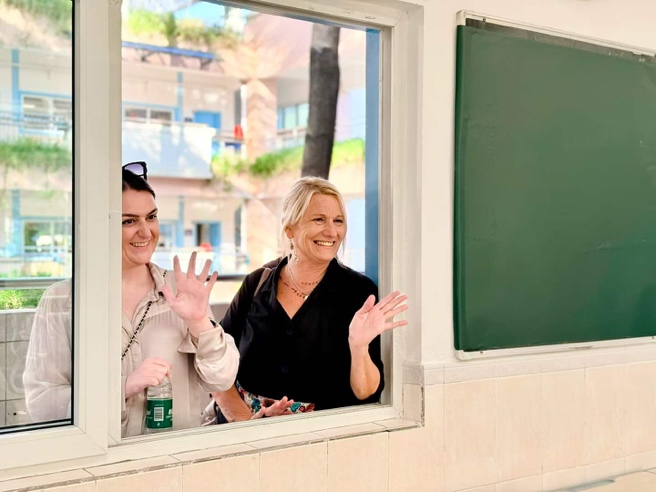
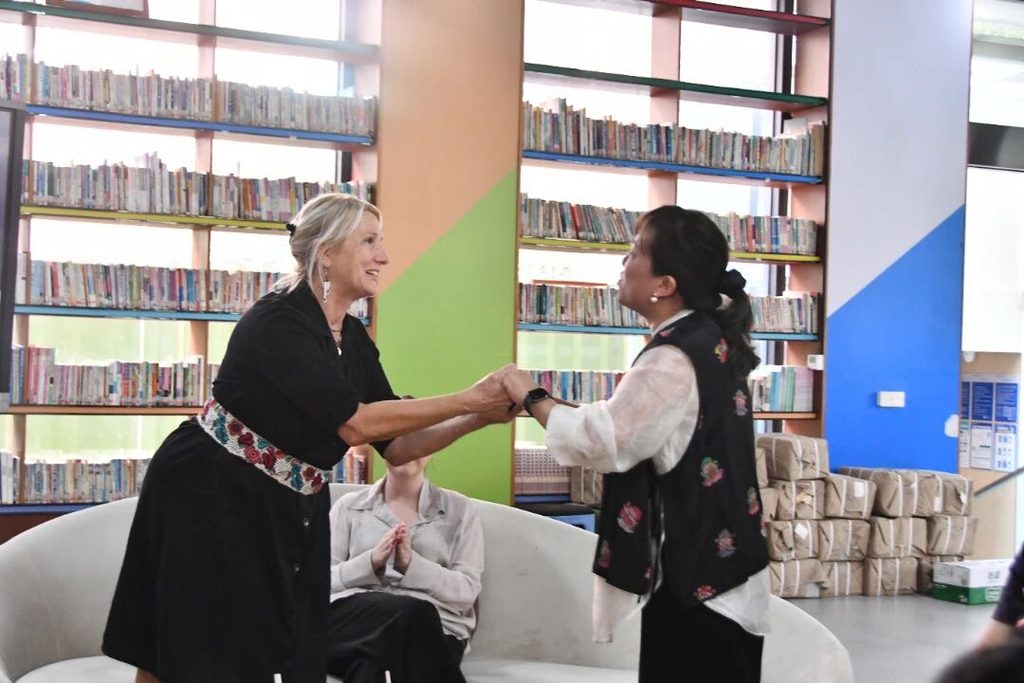
On 21 October, a children’s choir and school leaders welcomed the group to a primary school in Dongguan. As lead mentor for its creative drama programme, William has been training the school’s teachers to lead lessons as part of the regular curriculum. Jiang Ying and Zhao Wei of the Beijing Jheng Charitable Foundation, which supports the programme, joined the visit.
In a roundtable with teachers and school leaders, the group considered what counts as growth in a drama classroom. Sanja spoke about the limits of measuring that growth through grades or lists of knowledge acquired. “If students feel joy from the heart, that is enough,” she said. William and the principal pointed to other signs teachers can pick up in everyday school life, including what sparks children’s curiosity, how readily they get involved, and how the atmosphere in a class changes over time.
The teacher who spoke about hearing from quieter pupils brought the discussion back to relationships. Drama had given her a chance to notice what children were carrying into the classroom and how much they were willing to share when an imagined situation gave them a way in. A school leader described a change for adults, too. Taking part in the training and leading drama lessons had given teachers room to express and work through some of their own emotions.
After the roundtable, the visitors observed a drama lesson. Children moved freely, spoke up, and threw themselves into the games. Their ease and confidence stood out to the visitors. For teachers who work with the same pupils week after week, there are other things to notice. Who is beginning to join in? Who feels ready to share an idea? How do children respond when a classmate takes the story in an unexpected direction?
The school has set aside dedicated drama periods and plans to extend the programme across all grades. Training gives teachers the tools to lead the work. A regular place in the timetable gives them time to develop their practice with the same children. For a pupil who hesitated to speak this week, it means there is a next week.
Beijing · Human connection in the age of AI
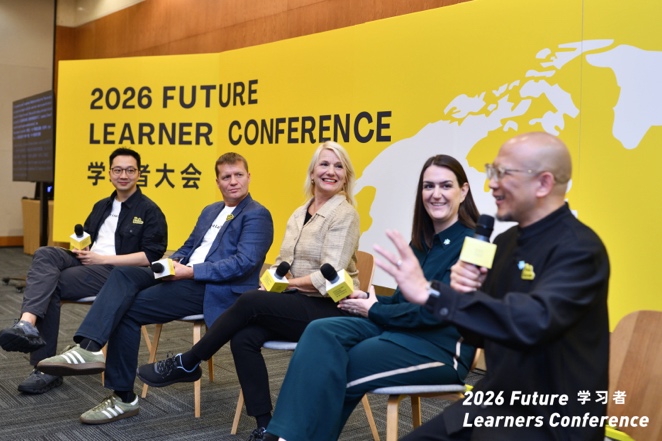
The tour continued at the 6th Future Learners’ Conference at the Beijing International Convention Center. The main conference on 23–24 October brought together more than 400 educators, speakers from 12 countries, and 166 schools and education organisations. Across four keynotes, 11 roundtables, and 24 hands-on workshops, participants debated how AI is changing education, what schools should value and assess, and how learners can take a more active role in shaping their education. Specialist sessions for school leaders and curriculum leads followed on 25–26 October.
Sanja, Madeleine, and William took part in a roundtable together, and each led a workshop for teachers. In a conference discussion on global innovation and the arts, Madeleine described imagination, creativity, and improvisation as capacities people can practise and draw on when circumstances change. Sanja returned to the idea she had raised in Shanghai. In drama, people can rehearse the future by trying out a response, seeing how others react, and considering what they might do differently.
In a separate discussion on teacher development and psychological support, William spoke alongside Tsinghua University professor Peng Kaiping, psychologist Li Songwei, and neuroscientist Huang Xiang. He argued that teachers facing exhaustion need opportunities to experience the arts and create for themselves. “Only when teachers’ inner lives are truly nourished can teaching regain its vitality,” he said. The workshops gave teachers time to participate as learners and consider what they might carry back into their schools.
While in Beijing, the three also accepted an invitation from the China National Theatre for Children to see a stage adaptation of Journey to the West. They took their seats as audience members, returning to the art form that had opened their conversation in Shanghai.
Looking ahead · What will be ready to share in 2028?
William expressed hope for a joint IDEA, IDEAC, and ITAC global conference in 2028. The tour gave that prospect a practical agenda. How can theatre-makers share creative decisions with children early enough for their ideas to change the work? What helps people feel welcome enough to take part in community theatre? How can schools give teachers the time and support to make drama part of everyday learning? And how might sustained arts participation support mental health and well-being in schools and communities?
Those questions belong to the people doing the work and to the people it is meant to reach. A gathering in 2028 could bring them into the same room: children who have helped shape a production, community members who have made theatre together, and teachers who can describe what changes when drama becomes part of the school week. Their experiences could help others see what is possible in their own settings and what it takes to begin.
In Shenzhen, Sanja told Paige she hoped to see her work in 2028. That invitation can extend to every school, theatre company, and community arts organisation willing to try something before then ——
Invite children into a rehearsal while there is still time to change the production.
Give teachers time to plan, lead, and reflect on a series of drama lessons.
Ask people who rarely take part in community theatre what would make it easier for them to join, then build the next project with them.
Bring what happens next to the 2028 conversation and invite the people who shaped it to tell the story themselves. A child can explain which of their ideas made it to the stage. A teacher can describe what she learned by listening differently. And Paige can show what she went on to make.